
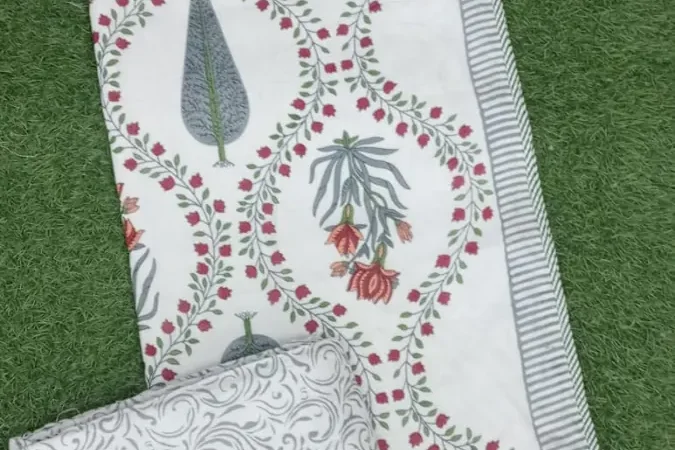
THE SHAIYAA KNOWLEDGE BASE · WINTER & GIFTING
Quick answer: for an adult winter bed, start with a well-fitting bedsheet, use a dohar or another suitable light cover, and add a rajai only when the lighter arrangement is insufficient. Keep the additional cover easy to remove. The goal is adjustable comfort, not a rule that every bed needs three layers. Begin with what you own and change one thing at a time.
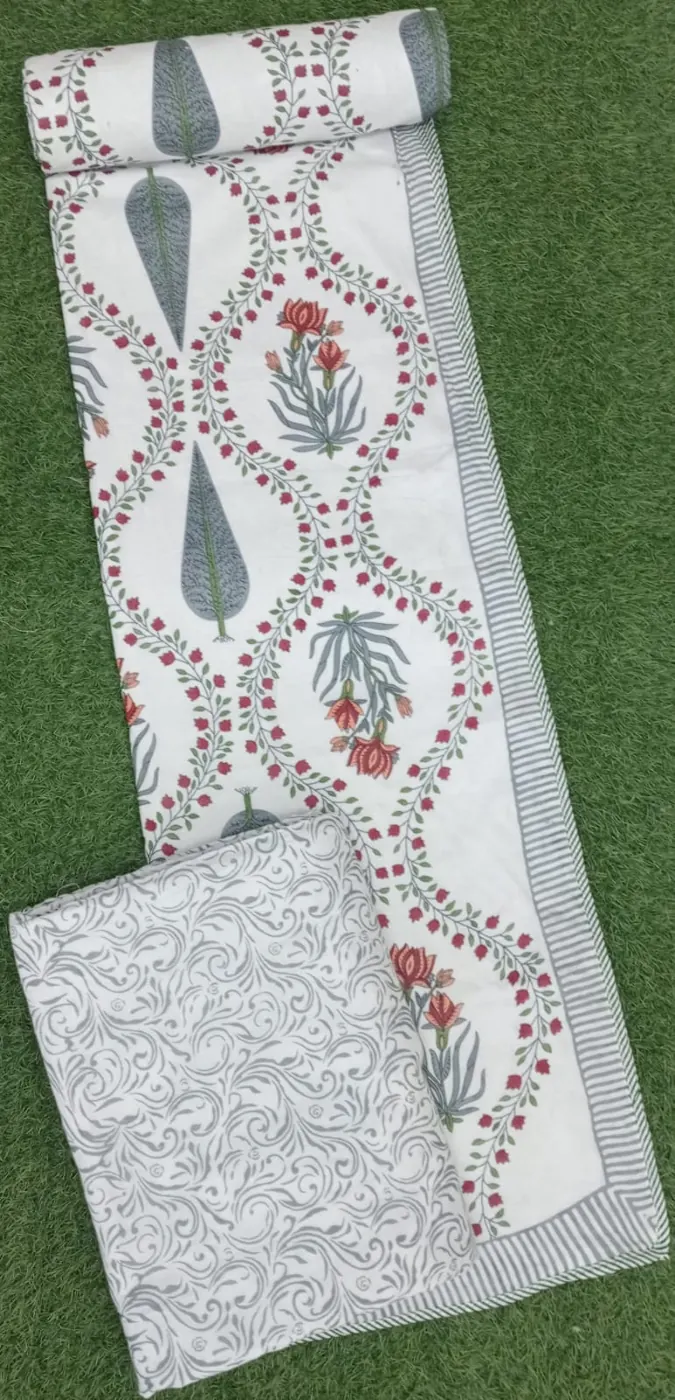
In this guide
- First decide what “too heavy” means
- Layer 1: make the bedsheet work properly
- Layer 2: choose a flexible everyday cover
- Layer 3: add the rajai when it has a job to do
- The winter bed: an adjustable sequence
- How should you adapt layers to different situations?
- Layer 4: add visual warmth without adding sleeping weight
- Coverage matters more than a matching size label
- What if two sleepers want different bedding?
- Make the care routine part of the layering plan
- A no-purchase winter bed reset
A winter bed can look inviting while remaining surprisingly simple. What often makes it cumbersome is not one particular fabric but the habit of leaving every decorative and sleeping layer in place. A bedcover, folded throw, extra quilt and tightly tucked blanket can accumulate until the person underneath has little room to adjust anything.
This guide is about making that arrangement more useful. It covers adult beds, shared preferences, measurements, care and the difference between visual richness and physical weight. It is not a temperature chart, a tested insulation formula or an infant bedding plan. For children, use the separate children’s winter bedding guide and age-appropriate product instructions.
First decide what “too heavy” means
Too heavy can describe several problems. The cover may be difficult to lift when you make the bed. It may feel restrictive around the feet. It may become a bulky bundle when you turn over. Or it may simply be too warm for your room. These experiences can overlap, but they do not all have the same solution.
For three ordinary nights, notice which adjustment you make first. Do you remove a decorative layer before sleeping, push the main cover away later, or repeatedly pull fabric back over your shoulder? Write one sentence in the morning. This is not a sleep experiment requiring equipment; it is a practical way to identify the irritation before buying something described vaguely as lighter.
If lifting is the problem, compare total product weights for similar sizes. If coverage is the problem, compare dimensions. If you feel too warm, begin by reducing unnecessary layers. If the arrangement slides around, look at how the pieces overlap and are tucked. Naming the problem clearly is the most useful first layer of the decision.
Layer 1: make the bedsheet work properly
The bedsheet forms the surface you lie on and the visual base of the bed. Begin with the right fit. A sheet that pulls loose at the corners creates bunching beneath every carefully chosen cover. For a flat sheet, measure mattress width, length and depth and allow for the sides and tuck you prefer. For a fitted sheet, check its specified mattress depth.
Cotton is available across many Shaiyaa sheet ranges, but fibre is only one part of how a fabric feels. Compare the exact fabric description and care instructions rather than treating all cotton sheets as identical. You can explore double bedsheets for examples, then use the deep-mattress measurement guide to understand the fit calculation before choosing.
Do not attempt to solve an insufficient top cover by adding another bulky sheet underneath. Equally, do not assume a winter-labelled sheet replaces an upper bedding layer for everyone. Your base should feel comfortable and stay in position. Once that is working, it becomes easier to evaluate what the dohar or rajai contributes rather than blaming the whole bed.
Layer 2: choose a flexible everyday cover
A dohar can serve as the lighter cover in an adjustable adult bedding arrangement. Check its layers and dimensions rather than relying on the category name. Some are more substantial than others. The Anjali Single Dohar, for example, lists a three-layer construction with a 200 GSM cotton middle and a 60 × 86 inch ready size.
Those figures are product details, not a promise that it will suit a particular room temperature. The same range lists approximately 850 g total weight per single dohar. Use that information to compare handling and coverage with similar items. The 200 GSM figure applies to the stated middle layer; it should not be mistaken for the complete item’s total weight.
If two people share a bed but prefer different coverage, two single dohars may be easier to adjust than one double cover. A pair consists of two separate pieces. If you prefer a shared textile, browse Double Dohars and compare the finished measurements. Decide how you will use the cover while sleeping, not only how symmetrical it looks after making the bed.
Layer 3: add the rajai when it has a job to do
A rajai is an optional additional layer when your existing cover is insufficient. It does not need to remain fully spread all evening just because winter has begun. Keep it folded within reach or lay it over the area where it is useful. An arrangement that is easy to change is more adaptable than one tucked so tightly that every adjustment disturbs the whole bed.
Shaiyaa’s Mulmul Single Rajai offers a documented example: 60 × 90 inches, a mulmul cotton outer, 650 g pure cotton filling and approximately 1.1 kg total weight. Compare those details with your needs. They do not establish a tested thermal performance, and they do not mean you should automatically combine it with the heaviest dohar available.
When two covers overlap, check their widths and lengths. If the upper piece is much narrower, it may leave one person with less coverage. If the lower layer bunches, try a simpler arrangement before assuming another accessory will fix it. Our Jaipuri Rajai guide explains filling, construction and care in more detail.
The winter bed: an adjustable sequence
Read this sequence as a set of options. You may use a sheet and one suitable quilt instead. You may find a dohar sufficient throughout the season. You may keep a rajai nearby for changing conditions. The useful principle is that each item earns its place through comfort, coverage or care, rather than appearing because a styled photograph includes it.
How should you adapt layers to different situations?
| Situation | A starting arrangement to try | What to observe |
|---|---|---|
| An adult AC bedroom | Sheet and an appropriate light cover | Direct airflow and your own comfort over the night |
| A mild winter evening | Sheet and dohar or a suitable lighter quilt | Whether you actually need an additional layer |
| A cooler adult bedroom | Existing cover with an optional rajai | Coverage, movement and ease of removing a layer |
| A guest room | Lighter cover with a spare clearly available | Different preferences and easy access |
| Two different preferences | Separate covers or an extra layer on one side | Whether the arrangement reduces nightly adjustments |
These are trials, not prescriptions or room-temperature thresholds. An exposed room, a different mattress protector or changed sleepwear can alter the experience. A city name is also not enough to select a cover: two homes in the same neighbourhood can feel different. Use what happens on your actual bed as the starting observation.
Layer 4: add visual warmth without adding sleeping weight
Visual warmth comes from the relationship between colours, prints and textures. It does not require every decorative textile to remain on the bed overnight. Choose one piece to lead: perhaps a patterned rajai, a printed dohar or a more expressive bedsheet. Let the other visible layers support it. This makes the arrangement easier to understand and reduces the temptation to keep adding.
A folded edge can reveal a contrasting print without introducing a separate throw. A quieter pillow-cover colour can connect an existing curtain with the bed. If you use cushion covers for daytime styling, give the cushions a proper place when you sleep. A chair that becomes a permanent pile of accessories is a sign that the styling needs simplifying.
Think in terms of a repeatable routine. Can you make the bed in a few ordinary steps, and can you prepare it for sleeping without moving six pieces around the room? The slow-living bedroom article explores how a calmer room can start with removing friction rather than purchasing a complete new look.
Coverage matters more than a matching size label
Measure every layer you plan to combine. Nominal labels such as single, king and double are not enough because ranges can use different final measurements. The Anjali single dohar’s finished length is 86 inches, while the Mulmul Single Rajai’s listed length is 90 inches. Both are single products, yet they do not create identical edges when placed together.
For a rough layout, put the widest piece beneath the narrower optional layer and centre them. Then test actual sleeping coverage. A neat flat arrangement cannot account for shoulders, turning or two people pulling in different directions. The visual Size Guide helps explain the flat geometry, but your preferred coverage remains a separate question.
When shopping online, send actual mattress measurements and explain whether you want one shared cover or separate pieces. Include the size of any layer you plan to keep. This gives the seller something concrete to compare. “I have a king bed” can mean different things; “my mattress is this wide and this long, and this cover feels narrow” is much clearer.
What if two sleepers want different bedding?
Separate covers are a practical option, even if the bed is shared. One person can use a lighter layer while the other adds a rajai. You can still coordinate colours when the bed is made. There is no rule that visual symmetry requires both people to sleep under the same weight or to agree on one cover for every night.
If you prefer a shared layer, keep the additional piece on the side that needs it. Before buying, test with an existing spare. If the extra cover shifts, change the overlap or consider two singles. A small trial costs less effort than discovering that a larger, heavier shared cover has preserved the original disagreement while making the bed harder to handle.
Make the care routine part of the layering plan
Layering is only useful if you can maintain the pieces. A washable light cover and a seasonal filled layer may suit your routine, but check each item separately. The Anjali dohar is listed as machine washable; that does not establish that the cotton-filled rajai can go through the same cycle. Composition, construction and the supplied care label need to agree.
Think about drying space before washing bulky bedding. Follow the product instructions and the machine’s guidance, and allow the whole textile to dry before storage. Keep the cover you use frequently accessible so you do not need to unpack the seasonal cupboard every few days. The washing guide explains the process, while the Care Guide supports everyday maintenance.
A no-purchase winter bed reset
Strip the bed back to the fitted base and one sleeping cover. Put daytime accessories aside. Make sure the sheet fits and that the cover is positioned for useful length rather than equal decorative overhang at both ends. Keep one appropriate spare within reach. Try this simpler arrangement before deciding which gap, if any, a new textile needs to fill.
After a few nights, review only three questions: did the cover stay useful, could you adjust it easily, and was there a specific time or situation when it was insufficient? If the answer is clear, you can shortlist a more suitable size or an optional layer. If the arrangement works, stop there. An improved winter bed does not need a larger shopping list.
For terminology, revisit the dohar, quilt and rajai comparison. For product examples, examine the specifications in Single Dohars and Jaipuri Rajai. The most useful outcome is a bed that adjusts to the people using it, with fewer unnecessary layers and a care routine that fits the home.
A 60 × 86 inch three-layer dohar with a specified cotton middle layer. A 60 × 90 inch mulmul cotton rajai with 650 g pure cotton filling. Four-piece coordinated set: 108 × 108 inch cotton bedsheet, two 19 × 29 inch pillow covers and a matching 90 × 100 inch cotton mulmul dohar.Explore from Shaiyaa
Anjali Mulmul Single / Pair Dohar
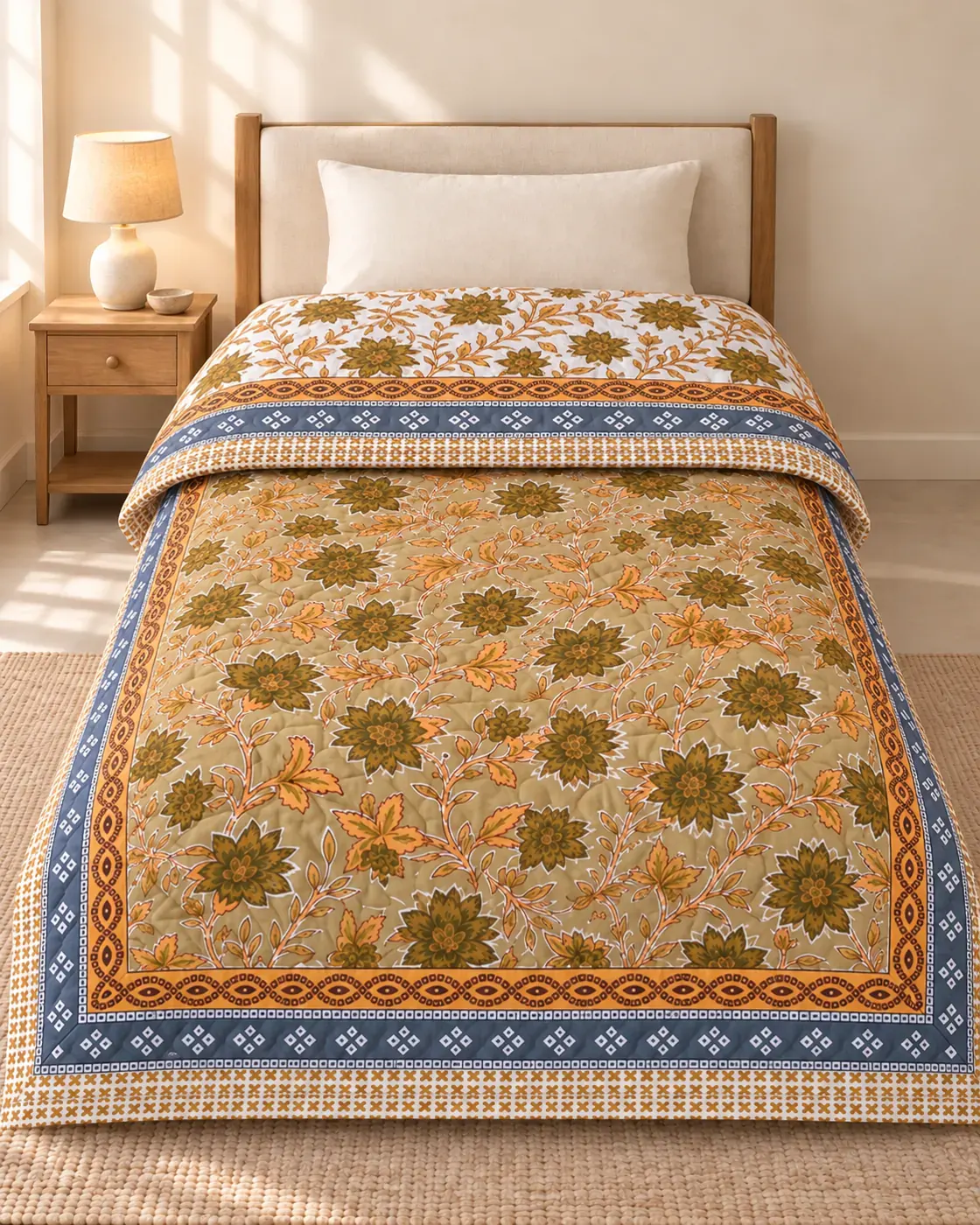
Mulmul Single Rajai – 650 g Cotton Filling
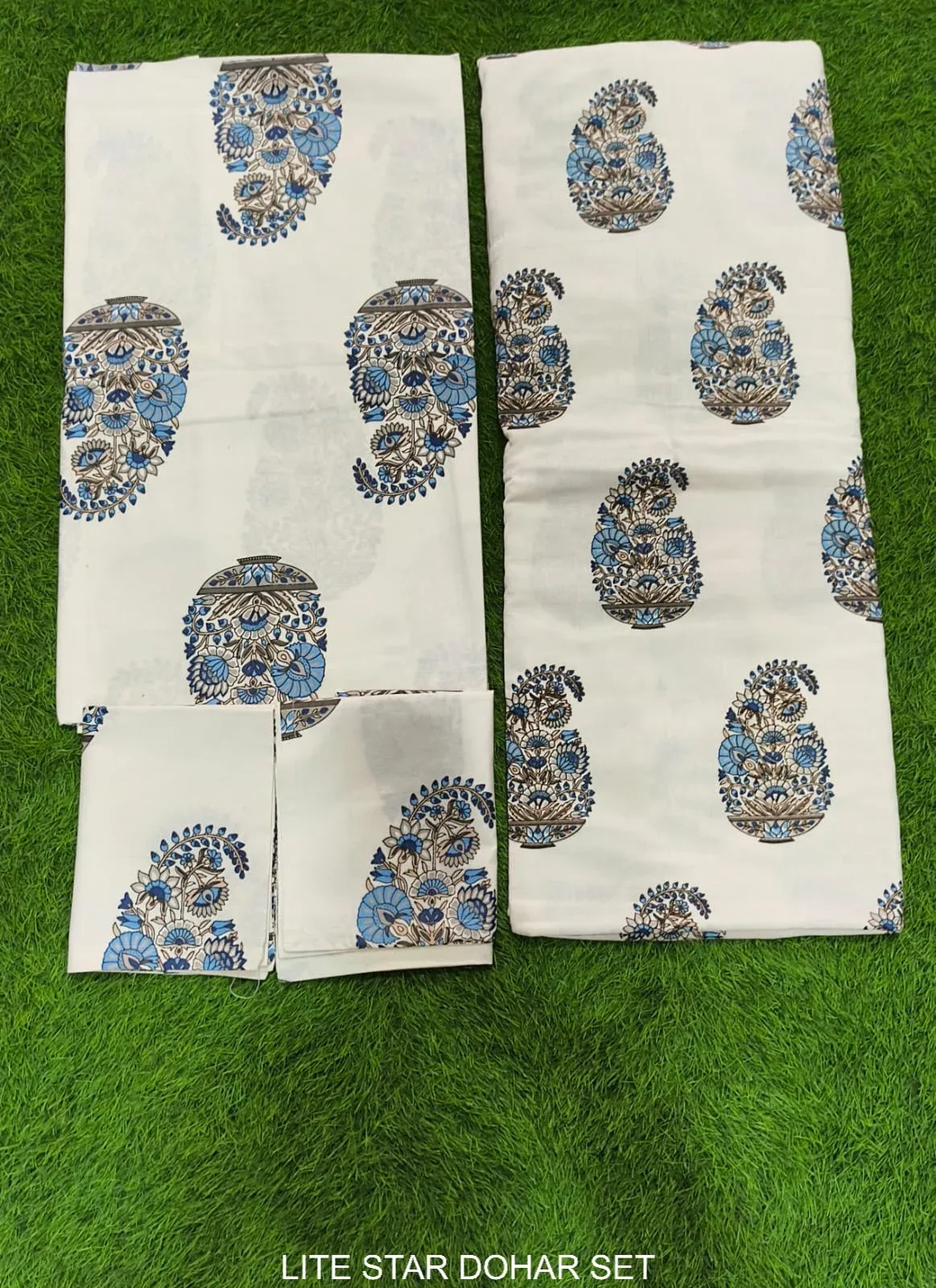
Litestar Dohar Bedding Set
Still have a product question? Ask Shaiyaa on WhatsApp.
Published by Shaiyaa. Product examples checked against the current Shaiyaa listings for this revision. Follow the exact item’s supplied instructions.
WINTER BEDDING GUIDE
Compare the layer, not just the label.
Rajai, dohar and quilt names can overlap. Compare the actual outer fabric, filling, finished dimensions, stitching and care before deciding what suits your winter routine.