
THE SHAIYAA SLEEP DESK · CHOOSING A LAYER
Quick answer: a dohar is often a lighter layered cover, a quilt commonly has a filling held between fabric layers, and a rajai is a traditional Indian filled bedding layer. Those names overlap in everyday shopping, so the best way to compare is to check the actual fabric, filling, weight, dimensions and care instructions of each item.
Few bedding questions create more uncertainty than this one: do I need a dohar, a quilt or a rajai? Product names can sound interchangeable, and listings sometimes use more than one term for an item. You may be choosing a warm layer for winter, a light cover for an air-conditioned room, or an extra blanket for a guest bed. The answer depends less on the name and more on how the textile is built and where it will be used.
Think of bedding as a set of adjustable layers. A bedsheet is the base. A light cover can add a little warmth and colour. A filled quilt or rajai can add more insulation. You can add or remove layers as the weather and room change. There is no prize for having the thickest bedding; the useful choice is the one that feels comfortable and is practical to care for.
What is a dohar?
A dohar is commonly understood as a light, layered cover, often made with cotton fabric. The name does not guarantee one exact construction: makers can vary the number and type of layers, fabric, stitching and finished size. Some products are described as a double-layer cotton cover, while others have additional design or finishing details. Read the specification for the particular dohar rather than assuming all dohars are identical.
Because many dohars are relatively light, people often choose them for mild weather, warm rooms or use as an extra layer over a sheet. A light cover may also be useful when a full quilt feels too warm. Comfort is personal, though; someone who gets cold easily may want a warmer layer even when another person is comfortable with a dohar.
Check the dohar’s dimensions and care label carefully. A dohar that looks thin in a photograph may still have a dense construction, and a soft-looking image cannot tell you its exact weight. Ask whether the size shown is the finished textile size, whether pillow covers are included, and how the item should be washed.
What is a quilt?
A quilt is generally made from layers of textile, often with a filling or batting between outer fabrics and stitching that holds the layers together. The stitching may form a decorative pattern or simply secure the construction. Quilts range from light coverlets to more substantial filled bed coverings, so the word “quilt” does not tell you the exact warmth on its own.
When comparing quilts, look for the outer fabric, filling material, total weight if supplied, quilting pattern and care instructions. A lofty fill may feel different from a flat, lightly padded layer. Stitching influences how the filling is held in place, but the visual pattern alone does not tell you how warm or heavy the piece will feel.
Quilts can be used as a top layer or folded at the foot of the bed. Their thicker construction may make them more challenging to wash and dry at home. Before buying a large quilt, find out whether it can be machine washed, how much it weighs when wet and whether a laundry service is recommended.
What is a rajai?
Rajai is a familiar traditional name for a filled bedding layer in India. A rajai may be made with cotton or another filling and can be hand-stitched, quilted or constructed in other ways. Regional names and seller descriptions vary. In some contexts, shoppers use “rajai” and “quilt” for closely related products, while a specific listing may distinguish them by material or finish.
Do not buy a rajai by the name alone if you have a specific warmth or material preference. Ask what the filling is, whether it is natural or synthetic, how the outer fabric is made, what the finished dimensions are and what care method is recommended. These details matter more than a broad category label.
A traditional filled layer can be a comforting part of a winter bed, but it should still fit the room and your routine. Consider the space available for airing, washing or professional cleaning, and how you will store it when the season changes. A lovely textile that cannot be cared for in your home may not be the most practical choice.
Dohar vs quilt vs rajai: a simple comparison
| Layer | Common construction | Often chosen for | Check before buying |
|---|---|---|---|
| Dohar | Light layered cover; construction varies | Mild weather, warm rooms, an extra light layer | Fabric layers, weight, size and wash method |
| Quilt | Outer fabric layers with filling secured by stitching | A more substantial top layer; decor and warmth | Filling, loft, weight, stitching and cleaning |
| Rajai | Traditional filled bedding; material and stitch vary | A warmer bedding layer in a cool room or season | Filling type, warmth, dimensions and storage |
This comparison describes common usage, not a strict technical standard. A lightweight quilt can be cooler than a heavy dohar, and a thin rajai can be less warm than a thick quilt. Product construction determines feel. If warmth is important, request the filling and weight information, or ask the seller how the specific item is intended to be used.
Which bedding layer is right for the season?
Warm weather and summer nights
Start with a bedsheet and add only the lightest cover you need. In a warm, non-air-conditioned room, the sheet may be enough for some sleepers. In an air-conditioned room, a lightweight dohar or cover can offer a comfortable layer without bringing out a thick quilt. Choose based on your room temperature, not the calendar alone.
Monsoon and changeable weather
Monsoon evenings can feel different from one day to the next. A light layer that is easy to fold and air may be useful. Keep bedding dry and ventilated; dampness and slow drying are more important practical challenges than choosing the thickest option. Make sure any cover is completely dry before storing it after use.
Cool nights and winter
A quilt or rajai may suit a cooler bedroom, but compare the item’s actual filling and weight. If the room is moderately cool, a lighter filled quilt may be enough. If it is very cold, several removable layers can be more adjustable than one heavy one. Add warmth gradually and choose a layer that is easy to clean and store.
Think about your room, not just the season
Two people in the same city can need different bedding. One sleeps with the fan on; another keeps the room air-conditioned. A top-floor room may cool differently from a shaded lower floor. A mattress protector, sleepwear and personal comfort also affect how warm a bed feels. The room around the bedding is part of the decision.
Consider who will use the item. A guest-room layer should be easy to air and straightforward to maintain. A child’s bed may need a textile that can be washed according to the household routine. A decorative quilt for the foot of the bed may be selected as much for its appearance as for warmth. For shared beds, remember that one person may sleep warmer than the other.
If you are shopping for a gift, ask the recipient about the room and the kind of bedding they already use. If that is not possible, a lighter layer can be easier to use across more conditions, but only if the size and material suit the bed. Include a care note with the gift when the product has specific instructions.
How to choose the right size
First decide whether you want the textile to cover just the mattress or drape visibly over the sides. Measure the bed or mattress width and length, then note the mattress height. Compare those numbers with the finished product dimensions. A textile should not be selected by a label like double or king without checking the actual inches.
Shaiyaa’s size information distinguishes product size from usage size. For example, the Shaiyaa chart lists double-bed variants from Queen at 90 x 100 inches through Maharaja Double at 120 x 120 inches. These are product options, not mattress footprints. Visit the bed size guide to compare the full chart before selecting a sheet or cover.
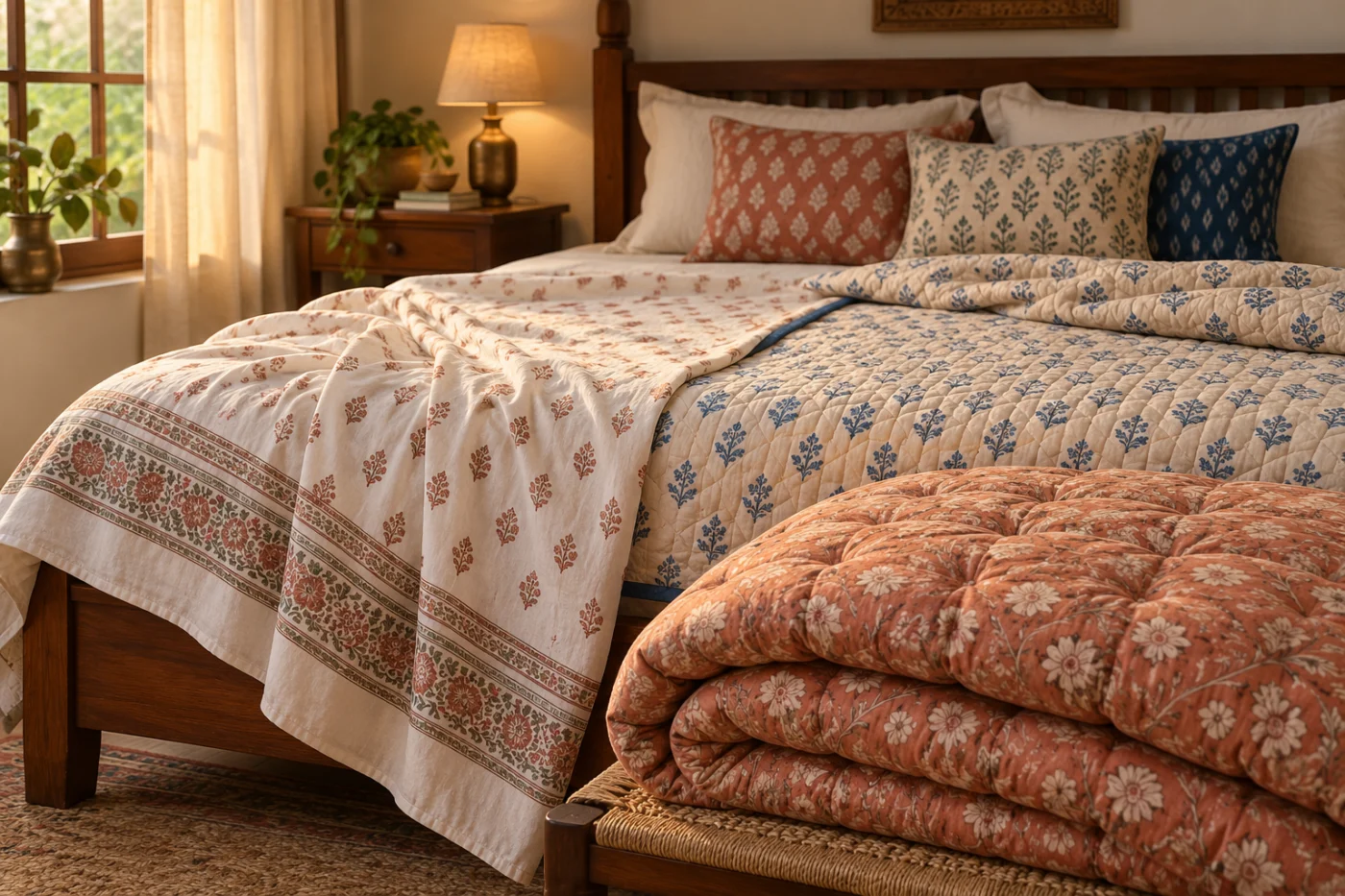
Check whether pillow covers or matching accessories are included. The photograph may show several decorative cushions that are not part of the set. Ask what pieces arrive, how many there are and their dimensions. For filled bedding, also ask whether the stated size is before or after quilting if this affects your fit decision.
Care and storage make a difference
A dohar may fit into a home washing routine more easily than a thick quilt, but only the product label can confirm its recommended method. Quilts and rajais can become heavy when wet and may not fit safely in a domestic machine. A wash label might call for gentle care, professional cleaning or spot treatment. Follow it rather than relying on the category name.
Air filled bedding between uses when the weather and label allow. Dry it fully before folding. Store bulky quilts or rajais in a dry, ventilated space and avoid compressing them tightly for long periods if that flattens the fill. Keep them away from damp walls and check stored textiles when seasons change.
Use a washable sheet as the layer closest to the body and clean it on your normal schedule. A cover that can be washed separately may reduce how often a larger filled item needs cleaning. Do not add a removable cover unless the product is designed for one or it can be used safely without bunching.
A five-question decision guide
- How warm is the room at bedtime? Consider air-conditioning, ventilation and seasonal changes.
- Do you want a light cover or filled warmth? Choose the construction that suits your comfort.
- How much weight do you like? Some sleepers enjoy a substantial layer; others want bedding that feels light.
- How will you clean it? Confirm machine capacity and care instructions before bringing home a bulky piece.
- What size gives the look you want? Compare dimensions and mattress depth, not only the product name.
If you are undecided, build a flexible bed: a sheet, a lighter cover and one warmer layer that can be removed. Keep each piece in reach rather than layering everything at once. This approach lets you respond to a cooler evening without replacing the whole bedding set.
Questions to ask before you buy
Ask the seller: What are the outer fabric and filling? Is there a filling at all? What is the weight? What are the exact finished dimensions? How many layers does the product have? How should it be washed, and can a home washing machine handle it? What pieces are included? These questions uncover the features that a styled photograph cannot show.
For a product page, look for answers in the description and care section. If a specification is missing, do not assume. A short message can establish whether the item is intended as a light summer cover, a medium quilt or a warmer rajai. Product names are useful starting points, while the details tell you what arrives.
Choosing a layer for an air-conditioned room
AC comforter is a broad retail description rather than a universal warmth rating. Compare the actual shell, middle layer or filling, finished dimensions and care instructions. Room conditions and personal comfort matter alongside the fibre name.
Our dohar, quilt and AC comforter comparison builds on this introduction with room examples, adjustable layers and practical questions to ask before ordering. Use the care guide to plan maintenance before choosing a filled cover.
Frequently asked questions about dohars, quilts and rajais
What is the difference between a dohar and a quilt?
A dohar is generally a lighter layered cover, while a quilt is commonly made with a filling held between fabric layers by stitching. Construction varies by maker, so check the product description and care instructions for the item you are considering.
Which is warmer, a dohar or a quilt?
Warmth depends on the specific fabric, filling, loft, construction and room conditions. Quilts are often made as warmer filled layers, while many dohars are lighter, but compare the actual product details rather than relying only on the name.
Is a rajai the same as a quilt?
Rajai is a traditional Indian filled bedding layer and may be quilted or stitched. The terms overlap in everyday shopping, but materials and construction vary. Check the product listing for filling, fabric, weight and care.
Can I use a dohar in summer?
A lightweight dohar may suit a warm room or air-conditioned setting, depending on the fabric and personal comfort. Review the listed layers and weight, and choose according to your room temperature and preference.
How do I choose the right quilt size?
Measure the mattress or bed area you want covered, then compare it with the quilt’s finished dimensions. Decide how much side drape you want and check whether the product size refers to the textile or the bed it is intended for.
Can a quilt or rajai be machine washed?
Only when the care label allows it and your machine can handle its wet weight and size. Some filled bedding needs professional cleaning or spot care. Do not assume a large textile is machine washable.
How many bedding layers should I use?
Use the fewest layers that keep you comfortable in your room. A sheet, a lightweight cover and a warmer layer can be added or removed as conditions change; there is no single correct combination.
What should I check before buying a dohar online?
Check the finished size, fabric composition, number of layers, any filling, weight if provided, care directions, included pieces and seller’s return or exchange terms.
Explore Shaiyaa’s Care Guide before washing a new layer and use the Bed Size Guide when comparing dimensions. For more practical ideas about bedding and home, return to the Knowledge Base.