
THE SHAIYAA BUYING DESK · FABRIC, FIT & FEEL
Quick answer: when choosing cotton bedsheets in India, check the fibre composition, actual finished dimensions, mattress fit, construction, print and care instructions together. A product title or thread-count number alone cannot tell you how a sheet will feel in your room. Start with what the label confirms, then compare the details that affect your daily use.
A bedsheet is one of the few things in a bedroom that touches your routine every single day. You notice whether it feels comfortable, whether it stays in place, how it looks with the rest of the room and how easily it can be cared for. Yet online shopping compresses all of that into a few photographs and a product description. This guide turns the important checks into a calm, practical sequence.
Shaiyaa makes home textiles with bedsheets at the heart of the collection. The most helpful way to choose one is to treat the product page as a set of answers: what is it made from, how large is it, what comes in the set, how is it finished and how should it be washed? If one of those answers is missing, ask before buying.
1. Begin with the fibre label
If you are looking for cotton, find the fibre composition in the product specifications. A clear label says whether the sheet is 100% cotton or a blend. Terms such as “cotton feel,” “cotton rich,” “soft touch” or “natural look” do not by themselves confirm the fibre content. The product photograph cannot prove it either. Read the written material information and keep it for reference.
Different cotton products can feel quite different. Yarn, weave, finishing, fabric weight and printing all influence the hand-feel and drape. A crisp sheet and a smooth sheet can both be cotton. Do not expect the word cotton to describe one universal texture. If you are sensitive to a particular feel, ask the seller whether the fabric is crisp, soft, lightweight or substantial, and treat the answer as product-specific.
For a blended fabric, look for the percentages rather than a vague name. A blend may be chosen for particular care or performance properties, but the important point is to know what you are buying. Clear fibre information helps you compare products fairly and understand why two sheets with similar colours or patterns may have different care needs.
2. Understand what thread count can and cannot tell you
Thread count is one measure of how many threads are counted within a specified area of fabric. It is not a complete quality score, and more is not automatically better. Counting conventions and product descriptions vary. A high number without clear fibre, construction and manufacturing information does not tell you enough to predict comfort or durability.
Instead of shopping by one headline number, look for a consistent set of details: fibre composition, finished dimensions, weave or fabric construction where supplied, stitching and edging, printing or dye information where relevant, and care directions. If a seller promotes a thread count but provides no reliable fibre description, ask for the missing detail. Transparent specifications are more useful than impressive numbers without context.
Feel is personal. Some people like a crisp, airy hand; others prefer a smoother drape. The room temperature, mattress protector, sleeping habits and the other layers on the bed all contribute. A product description should help you understand the particular item, but when that is not possible, a seller’s specific answer is more dependable than guessing from the image.
3. Check the size before the pattern
It is easy to fall for a print and only later discover that the size is wrong. Measure the mattress width and length, then measure its height. Compare those numbers with the finished bedsheet dimensions. Remember that mattress size and sheet size are different: fabric may need to cover the top and fall down the sides or tuck beneath the mattress.
Names such as single, double, queen and king are convenient, but brands do not always use them in the same way. Shaiyaa’s bed size guide gives the product size and usage size separately. Check the listing for the exact numbers, and ask the seller if your mattress is an unusual size, very deep, or paired with a topper that stays on the bed.
Look at pillow covers as separate components. Confirm how many are included and their dimensions. A set may use a standard pillow-cover size that is different from the pillows you own. The word “bedsheet set” does not always mean the same number of pieces across sellers.
4. Choose a construction and finish that suits your routine
Construction affects the way a sheet falls and the impression it creates. If a product lists a weave, use it as a clue, then compare the rest of the specification. If it does not name the weave, do not infer it from words such as “luxury” or “premium.” Those are positioning terms, not technical descriptions. Ask for the fabric details you need to make a confident comparison.
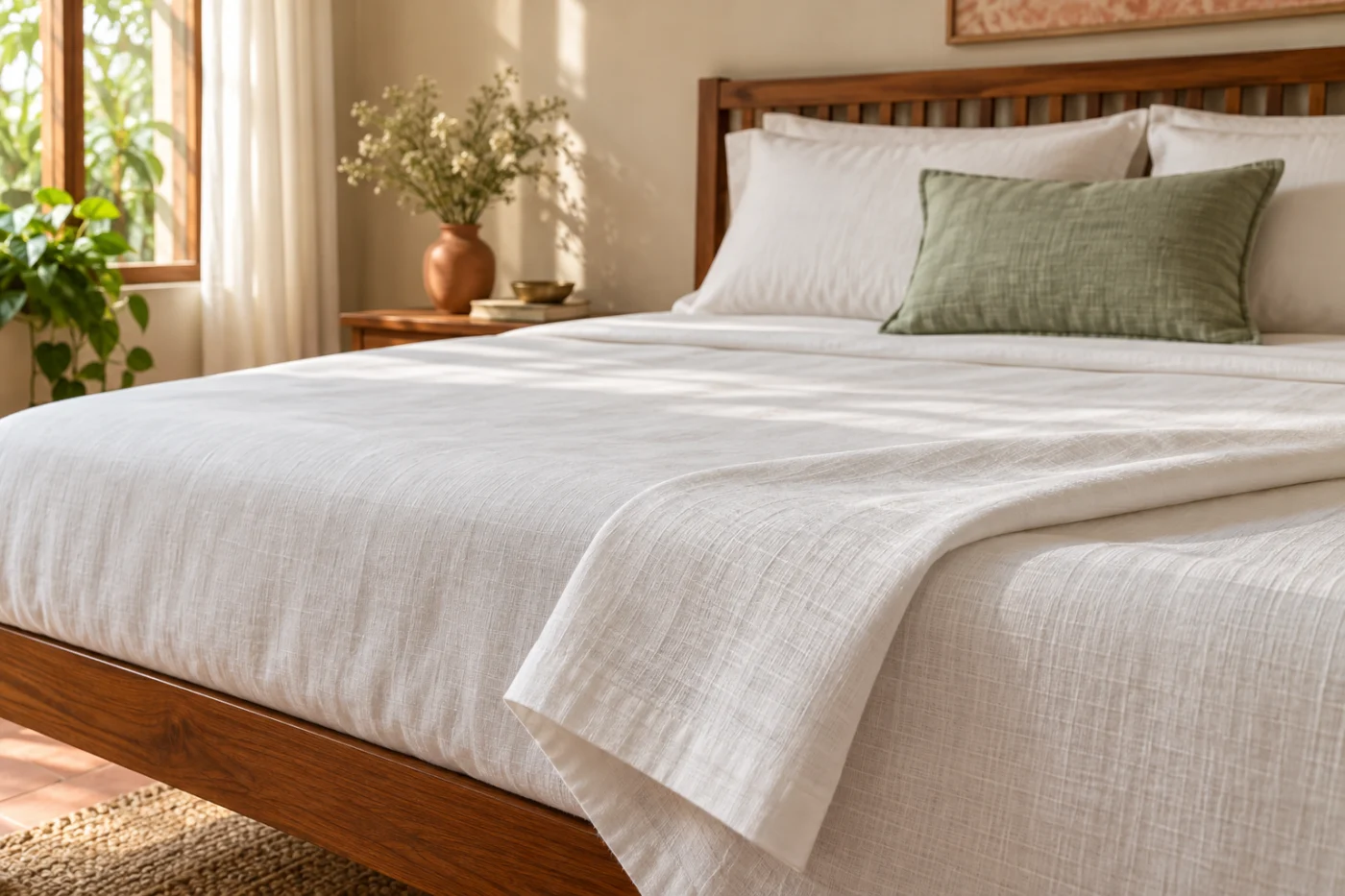
Inspect the edges and finishing shown in the images. Are the sides stitched? Does the product have a border, piping, quilting or another finish? A close-up can help you see design and construction, but it cannot replace written details. If the photos show a styled bedroom, confirm which pillows, throws and accessories are included and which are just part of the set.
Think about how you actually make the bed. A generous flat sheet may be important if you tuck deeply. If you prefer a neat, minimal look, excess fabric may not be what you want. A fitted sheet, where offered, needs a pocket depth that accommodates the mattress and topper. Match the product’s design to your habits instead of buying an item because it is popular in someone else’s room.
5. Pick a print and colour for the room you have
Colour can change the mood of a bedroom without changing a single piece of furniture. Before choosing, notice the fixed colours in your room: the wall, flooring, bed frame, curtains and wardrobe. If these are already patterned or visually strong, a simpler bedsheet can give the eye a place to rest. If the room is mostly neutral, a distinctive print can become the focal point.
For a coordinated look, choose one colour from the print and repeat it in a smaller detail, such as a cushion or a throw. You do not need every textile to match exactly. A room often feels more considered when tones are related rather than identical. Warm colours can make a space feel inviting; lighter, quieter tones can make it feel open. The right choice is the one you enjoy seeing each morning.
Online colour can vary with display settings and lighting. Use several product photographs, including close-ups, and read the written colour description. If exact colour matching matters, contact the seller. Ask whether the photo is a close representation and whether the design includes tonal variation. This is especially useful for handcrafted or printed textiles where the character of the surface may be part of the appeal.
6. Make care part of the purchase decision
Care is not an afterthought. A sheet that suits your life should be manageable to wash, dry and store. Read the care label or instructions before buying. Check water temperature guidance, whether gentle washing is recommended, and whether there are any cautions about bleach, ironing or tumble drying. If the product description has no care information, request it.
Consider the realities of your home. Do you line-dry most laundry? Do you have limited drying space during monsoon? Do you prefer low-effort ironing, or are you happy with the relaxed look of cotton? These questions do not have universal answers, but they help you choose a fabric and finish that you will enjoy maintaining.
Different items in one bedding set may not share the same care requirements. A printed cotton sheet, a quilted pillow cover and a decorative textile could need different handling. Read the instructions for each component, and avoid assuming that the care symbol for one piece applies to everything in the bundle.
7. Evaluate the product page like a careful buyer
- Is the fibre composition stated clearly?
- Are finished dimensions shown in inches or centimetres?
- Does the listing explain mattress fit or usage size?
- Are pillow-cover quantity and dimensions listed?
- Can you tell what is included from the photos and copy?
- Are washing and drying instructions available?
- Does the seller describe print, finish and colour honestly?
- Are shipping, return or exchange terms easy to find?
A product page that answers these questions saves time and builds trust. If it does not, ask one message with the details you need: “My mattress measures __ wide, __ long and __ high. What is the bedsheet’s finished size, and will it give the tuck I want?” That question is more useful than asking only whether it is a queen or king sheet.
Three real-life ways to narrow the choice
For a warm room
Start by looking for a clearly specified cotton fabric and care directions that suit frequent washing. A lighter visual palette may make the room feel airy, though colour does not change fabric temperature. Compare construction and fabric weight if the seller provides them. Choose bedding that feels comfortable to you, and remember that sleep comfort also depends on room temperature, mattress, clothing and other layers.
For a guest room
Prioritise clear sizing, straightforward care and a design that works with the room as it is. Keep the matching pillow covers together with the sheet set so the bed is easy to prepare. A versatile print or colour can work across seasons and with different blankets. Before guests arrive, wash according to the label and allow every layer to dry fully.
For a room that needs a visual lift
Choose the bedsheet as the room’s main pattern, then keep nearby textiles simpler. A printed bed can add personality without requiring a full redecorating project. If you already have patterned curtains or rugs, choose a smaller-scale print or a quieter ground colour. Take a quick photo of the room before shopping; it helps you judge whether a product will add balance or visual clutter.
Common buying myths worth leaving behind
“The highest thread count is always best.” It is one number, not a full quality test. “All cotton feels the same.” Construction and finish make a meaningful difference. “King means one fixed size.” Product dimensions vary by seller. “The photo tells me what is included.” Styling props may not be part of the set. “Care will be obvious.” Printed, quilted and blended pieces can have product-specific instructions.
Good shopping is not about memorising technical language. It is about asking a few precise questions and choosing a product whose details match your bed and habits. When the description is clear, trust the specifications over assumptions. When it is not clear, asking before purchase is sensible.
Your cotton bedsheet buying checklist
Save this quick sequence: identify the fibre; measure the mattress; compare finished dimensions; check pillow covers; understand the construction and finish; choose a print that works with the room; read care instructions; and verify what is included. If a specification matters to you—such as a particular hand-feel, low-maintenance wash or exact colour—confirm it directly with the seller.
Explore the Shaiyaa Size Guide for the supplied product and usage measurements, and read the Bedding Care Guide before your first wash. The Shaiyaa Knowledge Base brings all of these practical guides together so that you can return to the details whenever your home needs them.
Go deeper into cotton quality and fit
Thread count is one specification, not a complete measure of luxury. Read the thread count guide for multi-ply yarns, staple length, percale, sateen and questions about product-specific dye claims. A high number alone does not prove quality, and 400–500 is not a universal physical ceiling.
Then use the deep-mattress sizing guide to check the finished dimensions of your chosen range. Cotton content, usable size, included pillow covers and care requirements should all be clear before payment.
Frequently asked questions about cotton bedsheets
How do I know if a bedsheet is pure cotton?
Read the fibre-composition label or product specifications and look for an explicit statement such as 100% cotton. Do not rely on a photograph, a soft hand-feel or a product title alone.
What is the best cotton bedsheet for hot weather in India?
Many people prefer breathable natural cotton for warm weather, but comfort also depends on weave, fabric weight, room conditions and personal preference. Check the listed fibre and construction rather than assuming every cotton sheet feels identical.
Does a higher thread count always mean better quality?
No. Thread count is only one specification and may be presented differently by brands. Consider fibre, yarn, weave, finishing, stitching, actual size and clear care instructions together.
How do I choose the right bedsheet size?
Measure the mattress width, length and height, then compare those measurements with the sheet’s listed dimensions and any usage-size guidance. Do not choose using the label queen or king alone.
Which bedsheet colour is easiest to style?
Choose a colour that works with the room’s existing walls, furniture and bedding. Neutrals are flexible, while a print or accent colour can become the room’s focal point.
Do cotton bedsheets shrink after washing?
Cotton can change slightly with laundering, but the amount depends on fabric treatment and care. Follow the product label, avoid unnecessarily harsh heat, and ask the seller about shrinkage expectations when they are not stated.
What should I check before buying cotton bedsheets online?
Confirm fibre composition, product dimensions, included pillow covers, colour and print details, care instructions, seller policies and what the photos represent.
How many cotton bedsheets should a home keep?
The number depends on laundry frequency, household size and how often you change bedding. Many homes keep a rotation so one set can be on the bed, one in the wash and another ready, but there is no required number.