
THE SHAIYAA CRAFT DESK · PRINTED TEXTILES
Quick answer: a “Jaipuri” or “Rajasthani print” name can point to a design influence, but it does not by itself confirm that a bedsheet was hand block printed. Before buying, ask how the specific textile was printed, check the fibre and finished dimensions, and read the care instructions. A beautiful motif and clear product facts belong together.
Some bedsheets make a room feel as though it has found its own rhythm. A repeating flower, a trail of leaves or a small geometric mark can bring a little craft and character to the bed without changing the furniture around it. Rajasthan is home to celebrated textile-printing traditions, and words such as Jaipuri, Sanganeri and Bagru often appear in bedding searches. They deserve a little care in how we use them.
This guide is both an introduction to the craft vocabulary and a buyer’s checklist. It explains what those terms can mean, why printing method matters, how to choose a design for your room, and what information to verify on a product listing. It also keeps an important distinction clear: a print inspired by a region is not automatically a hand-printed textile from that tradition.
What does “Jaipuri block print” mean?
In everyday shopping, “Jaipuri block print” can be used broadly for prints associated with Jaipur or Rajasthan: florals, vines, paisleys and repeating motifs in palettes that feel at home in the region. The phrase is not, by itself, a technical certificate of origin or a guarantee about the method used to print the cloth. Sellers may use it for a craft tradition, a design influence or a product style.
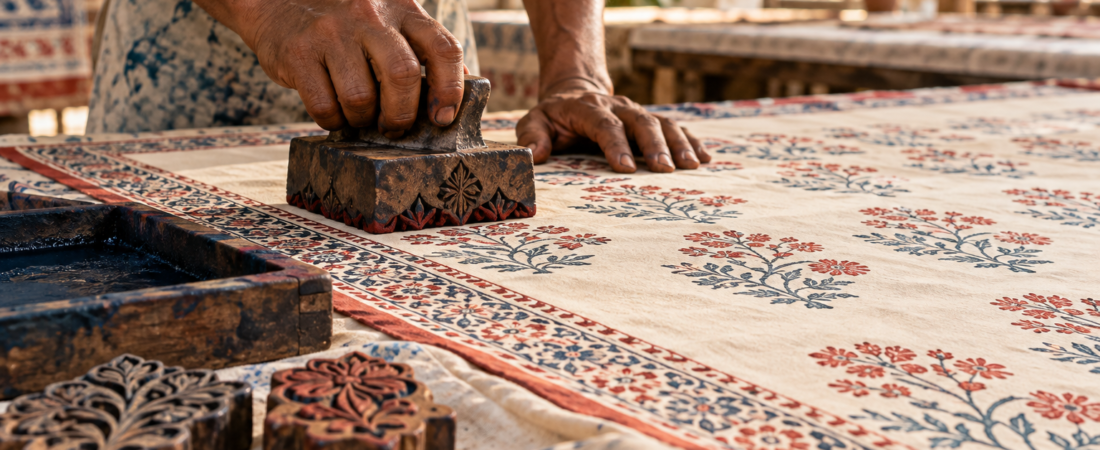
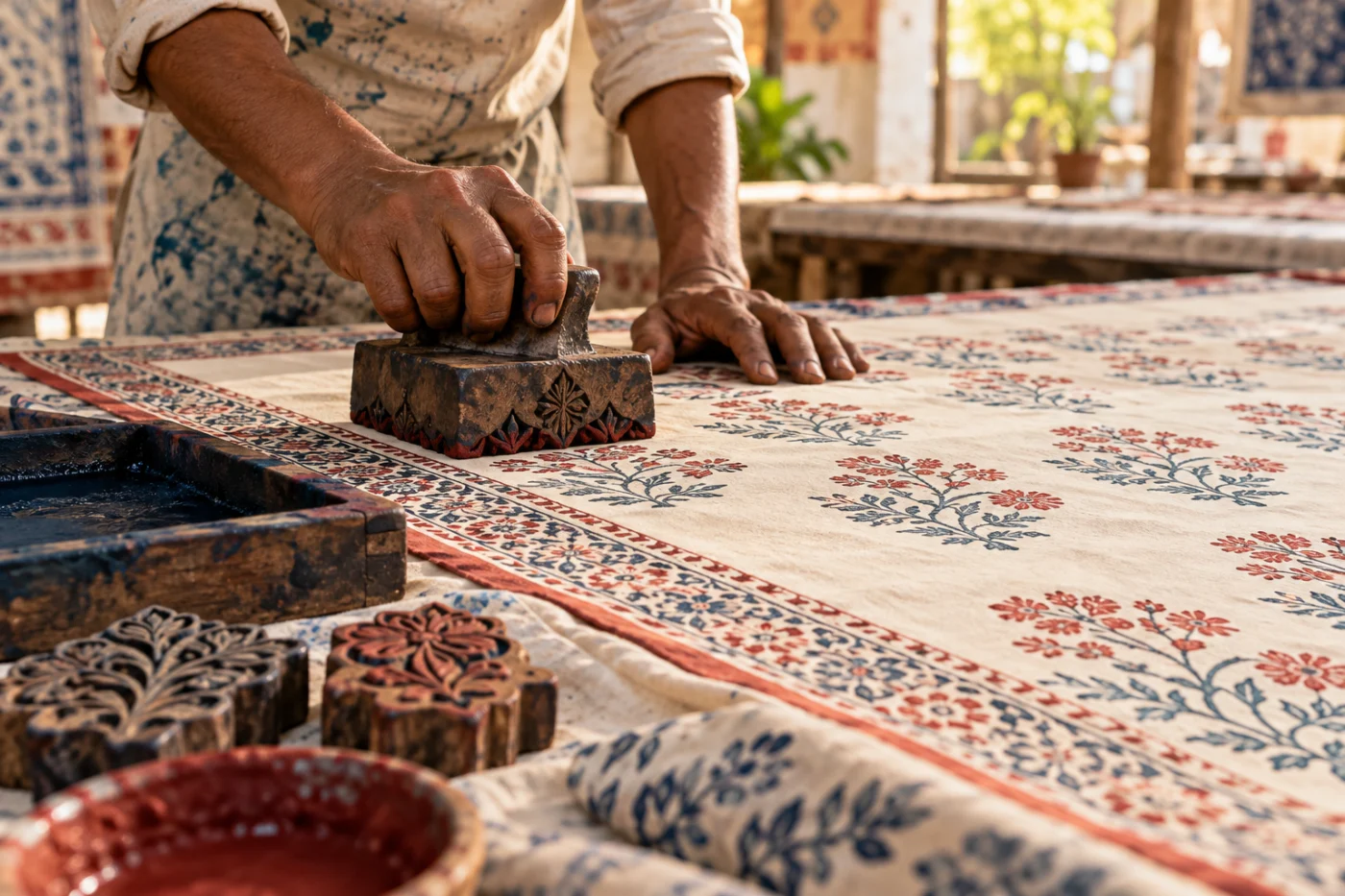
Hand block printing is a specific process in which a carved block is pressed onto prepared fabric with colour or printing paste. A design may use separate blocks for outlines and different colours, and the printer has to position them repeatedly across the cloth. The result can carry the rhythm of the maker’s hand. But not every textile with a traditional-looking motif was produced with wooden blocks; screen and digital methods can also reproduce similar visual language.
When a product is described as hand block printed, ask the seller to confirm that this method applies to the actual sheet you are buying. If the listing only says “Jaipuri print,” ask whether it is hand block, screen or digitally printed. A trustworthy answer clarifies the method without diminishing the beauty of other printing techniques.
Sanganeri and Bagru: two Rajasthan printing traditions
Sanganer, near Jaipur, is known for a hand block-printing tradition associated with fine motifs and light fabric grounds. The Government of India’s handicrafts reference describes designs including flowers, paisleys, vines, leaves and birds, with small butis and butas as common forms. The process includes preparing fabric, printing outlines and filling colours with wooden blocks, followed by drying, steaming, washing and finishing.
Bagru is another distinct Rajasthan hand block-printing tradition. The government craft reference notes its history in Bagru and the use of carved sheesham blocks, multiple blocks for motif components and floral forms such as buti and buta. It describes traditional colour and dye practices as well as modern workshops that may use screen printing and chemical dyes to meet different production needs.
These short descriptions are context, not a way to identify a particular product from its photograph. Craft practice evolves, and contemporary makers work with varied materials and methods. A textile sold online may be inspired by a Sanganeri or Bagru motif without being made by a craft process from that place. Look for exact product details and transparent provenance statements.
Why the printing method is worth asking about
The method helps set expectations about how the design was made, how it may vary and what the seller is claiming. A hand-printed repeat can show slight shifts between impressions; a screen-printed or digitally printed design may have a different surface and level of repeat consistency. These differences are not a simple ranking. Each method can create an appealing textile, but the description should match the method.
Ask clear questions: Was this exact bedsheet hand block printed? Where was it printed? Is the print made with dyes or pigments, if known? Are minor variations expected? Is the product in the photograph the same design and colour as the one shipped? A seller may not have every technical detail, but their answer should distinguish known facts from assumptions.
Look at the product images for close-ups of the print and reverse side, but remember that photography cannot prove the manufacturing method. A very regular repeat does not automatically mean machine printing, and small variation alone does not prove handwork. Written product information is the useful evidence for a buying decision.
How to choose a print for your bedroom
Start with the visual balance of the room. If the curtains, rug or headboard already have a strong pattern, consider a smaller motif or a quieter ground colour. If the room is mostly plain, a larger floral or a confident repeat can give the bed a clear focal point. The bed is usually the broadest uninterrupted surface in the room, so a bedsheet print has a noticeable effect.
Consider motif scale as well as colour. A tiny repeating buti can read as texture from the doorway; a large botanical motif becomes more prominent. Neither is universally better. Think about the distance from which you see the bed and whether you want the print to feel calm, playful, decorative or dramatic.
Use a photograph of your bedroom to compare options. Notice the wall, floor, bed frame and curtains. Pick a colour from the bedsheet and repeat it once elsewhere, perhaps in a cushion or throw, rather than matching every object. This creates a considered connection without making the room look like a complete set from a catalogue.
Check cotton, dimensions and set details
Many printed bedsheets are made from cotton, but a motif says nothing about fibre content. Look for an explicit material statement in the product specification. “Cotton look” or “Jaipuri style” does not confirm 100% cotton. If the fibre matters to you, ask for the written composition and whether the pillow covers use the same fabric.
Next, verify the finished size. Shaiyaa’s size guide lists product and usage sizes separately; for example, it gives a queen product size of 90 x 100 inches and king at 90 x 108 inches. Other shops may use different labels and dimensions. Measure your mattress and compare the numbers before ordering. A named size is only a shortcut, not a substitute for the product specification.
Check the number and dimensions of pillow covers, whether the sheet is single- or double-sided, what the reverse looks like, and which pieces are included. Styled product photography can include cushions, throws or a bed runner that are not part of the purchase. A clear set list avoids surprises.
Understand colour, variation and first wash
Screen brightness and room lighting can make colours look different from the textile in daylight. Compare more than one photograph if available and read the product description. If you need the colour to match existing curtains exactly, ask the seller before ordering. A phone image is useful for direction, but it is not a calibrated colour reference.
Printed textiles may have care instructions that differ by fibre, dye, pigment, finishing and construction. Follow the item’s care label, wash similar colours together and avoid bleach unless the label permits it. If washing before first use is allowed, do so according to the instructions and pay attention to any colour-care guidance. Do not assume a handmade or machine-printed item can be cared for in a particular way based only on its appearance.
When the listing states that a print is handcrafted and may vary, understand exactly what is meant. Does variation refer to alignment, shade or motif placement? Does the product image show a representative sample or the exact piece? Knowing the seller’s policy helps you decide whether that character is part of the design you want.
A quick checklist for buying a Jaipuri bedsheet online
- Confirm the printing method for the exact product: hand block, screen, digital or another process.
- Check whether “Jaipuri” identifies style, origin or both, and read any provenance details.
- Verify fibre composition in writing.
- Measure your mattress and compare exact finished dimensions, not just queen or king labels.
- Confirm how many pillow covers are included and their sizes.
- Review close-up photographs, reverse-side images and colour notes.
- Read washing, drying and ironing instructions before purchase.
- Understand how the seller handles expected variation, shipping and exchange.
This checklist works for any patterned bedding, whether the design is hand printed or made by another method. It helps you buy the textile you actually want, with the right expectations about its feel, dimensions and care.
Questions to ask a seller
Try a concise message: “I’m looking at this bedsheet. Is this exact design hand block printed, and where is it made? Please confirm the fibre composition, finished dimensions, pillow-cover quantity and care instructions. Do the product photos show the colour and print placement I should expect?” This invites useful specifics and gives the seller a chance to correct any ambiguity on the page.
If you are drawn to the story of a craft, ask the seller how the makers or production method are documented. A careful brand should avoid claiming a craft origin it cannot substantiate. You can still enjoy a design inspired by Rajasthan while knowing whether the textile was hand printed, screen printed or digitally produced.
Craft with context, home with character
Rajasthan’s printing traditions hold a deep visual vocabulary, shaped by communities, places and changing practice. Learning a few names—Sanganeri, Bagru, buti, buta—can make looking at a textile richer. But the words matter most when used precisely. They should help a buyer understand where a design comes from and how it was made, not blur every floral repeat into one generic label.
For a bedroom, choose the pattern that makes the room feel like yours. Let the craft detail add meaning, and let the practical information—cotton composition, measurements and care—make the purchase easy to live with. The most memorable textile is not only beautiful in a photograph; it belongs naturally in the everyday rhythm of your home.
Browse the Shaiyaa Size Guide for measurements and the Care Guide for general bedding-care help. More stories about craft and home are collected in the Knowledge Base.
Look beyond a single authenticity clue
Small repeat variations, soft edges and colour on the reverse can support a closer conversation about printing, but no one visual clue proves a textile’s origin or process. Ask for the specific making method and product provenance.
Read the Sanganeri and Bagru craft guide for a more detailed explanation of direct and resist printing and the roles of outline, background and filling blocks. Pair it with the printed textile care guide before the first wash.
Frequently asked questions about Jaipuri block print bedsheets
What is a Jaipuri block print bedsheet?
It is a bedsheet described as using a block-print design associated with Jaipur or Rajasthan. Ask the seller whether the specific textile is hand block printed, screen printed or digitally printed; the word Jaipuri alone does not verify the method.
Are all Jaipuri bedsheets hand block printed?
No. A regional style or design name does not guarantee that a piece was printed by hand. Check the product description and ask the seller to confirm the printing method for that exact item.
What is the difference between Sanganeri and Bagru prints?
They are distinct Rajasthan hand block-printing traditions. Government craft references describe Sanganer prints as fine, delicate motifs often on light grounds, while Bagru is associated with its own processes, motifs and colour traditions. Individual products can vary.
How do I care for a block print bedsheet?
Follow the product’s care label. Separate colours, use the recommended detergent and temperature, avoid bleach unless permitted, and dry as directed. Ask for product-specific instructions if none are supplied.
What size Jaipuri bedsheet should I buy?
Measure your mattress width, length and height, then compare them with the exact textile dimensions. Brand terms such as queen and king can vary, so compare inches rather than relying on the style name.
Can a hand block printed bedsheet have small variations?
Hand printing can show character from repeated placement and block application, but the expected variation depends on the specific product and production method. Ask the seller how the actual item is made and represented in photographs.
Is cotton a good choice for a printed bedsheet?
Cotton is a widely used bedding fibre, but products differ in weave, weight, finish and care. Check the fibre composition and product specifications instead of assuming every printed sheet has the same feel.
What should I ask before buying online?
Confirm printing method, fabric composition, product dimensions, pillow-cover quantity, care instructions, colour representation, included pieces and the seller’s return or exchange policy.
Craft note: “Jaipuri” and Rajasthan print terms can be used in different ways by sellers. Confirm provenance and printing method for the particular product before purchase.